When someone is experiencing domestic abuse, they are often more likely to seek help for the impact on their health than to disclose the abuse itself. They may present with anxiety, depression, chronic pain, injuries, sleep difficulties or other health concerns without ever saying what is happening to them.
By equipping healthcare professionals to recognise these presentations, ask safe questions and make referrals to specialist domestic abuse services, the IRIS Programme (Identification & Referral to Improve Safety), helps patients access support earlier, often before the abuse escalates. Earlier identification can improve safety, reduce the long-term impact of abuse and ensure patients receive the specialist support they need at the earliest opportunity.
This is the ambition behind the IRIS Programme, IRISi’s evidence-based approach to improving the healthcare response to domestic abuse through strong partnerships between healthcare services and specialist domestic abuse organisations.
Earlier this year, IRISi worked in partnership with Bermuda’s Department of Health and Centre Against Abuse to co-produce an adapted pilot of the IRIS Programme for Bermuda, commissioned by the UK Health Security Agency’s UK Overseas Territories Programme, funded by the Foreign and Commonwealth Development Office.
Drawing on the strengths of the evidence-based IRIS model, the programme was carefully adapted to reflect Bermuda’s healthcare system and local context, while remaining true to the core principles that underpin its success.
This collaborative approach is central to IRISi’s work. Successful implementation is not about importing a programme unchanged, it is about working alongside local experts, survivors and services to develop a model that is effective, sustainable and meaningful within each healthcare setting.
In March, IRISi delivered its Train-the-Trainer (T4T) course in Bermuda, supporting local delivery partners with the knowledge, skills and resources to begin delivering the adapted programme themselves. Over the following months, IRISi continued to work alongside partners, providing implementation support and advice to the IRIS team in Bermuda, in preparation for their first IRIS training session.
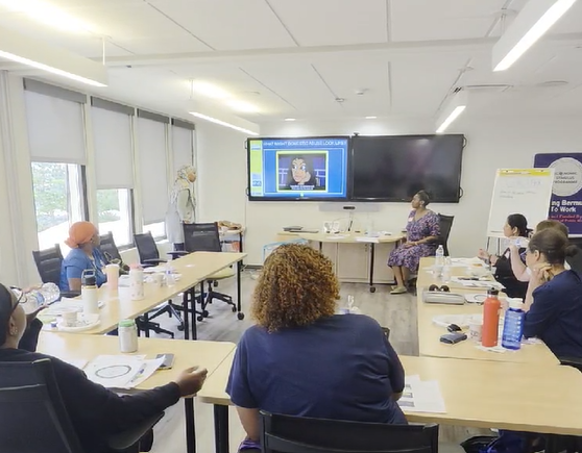
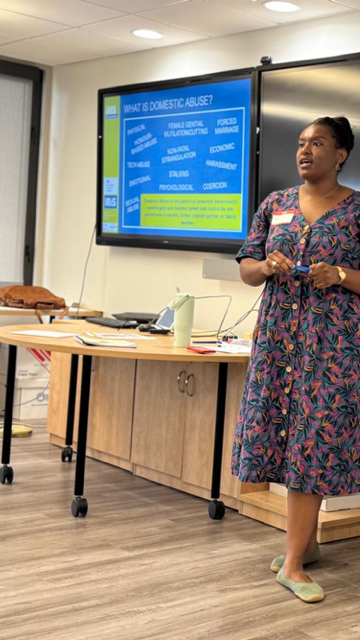
That shared commitment reached an exciting milestone last month, when a domestic abuse specialist from Centre Against Abuse and a local doctor from the Department of Health delivered Bermuda’s first locally led IRIS training session for healthcare professionals.
For IRISi, this is what successful implementation looks like: combining evidence and expertise with local knowledge, creating the confidence, capability and identifying the infrastructure needed to embed a stronger healthcare response to domestic abuse that can continue long into the future.
The first locally delivered training session represents an important step in Bermuda’s IRIS pilot and demonstrates the ongoing commitment of local partners, including Centre Against Abuse and the Department of Health, to strengthening the healthcare response to domestic abuse. By equipping healthcare professionals to recognise the signs and presentations associated with domestic abuse, the programme aims to ensure that more patients are identified earlier and offered the right support at the right time.
Sunita Stürup-Toft, Deputy Head of Programme and Consultant in Global Public Health at UKHSA, said:
“Seeing local professionals confidently deliver their first IRIS training is exactly the impact we hoped to achieve through commissioning the train-the-trainer model from IRISi for Bermuda. The success of Bermuda’s first training demonstrates the power of investing in local leadership and expertise, equipping communities with the skills and confidence to drive their own violence prevention efforts.
This achievement also reflects the outstanding support and expertise of the IRISi team, whose commitment to partnership, quality training and capacity building has been instrumental in empowering local trainers to deliver the programme with confidence.
It is inspiring to see such professionalism and commitment in action, creating sustainable change that will benefit families and communities for years to come.”
The first training session was met with strong feedback from participants, who highlighted the practical value of the learning and the confidence it gave them to support patients:
“Well executed! Thought provoking! Wealth of knowledge! Eye opener!”
“Excellent presentation! Very confident where to refer the clients. Very good learning experience.”
“What an excellent tool to have in my arsenal to assist my clients. I now feel more equipped to help my clients.”
“Please make this training mandatory and an annual occurrence.”
Laurie Sheill, CEO from Centre Against Abuse, who observed the session, reflected on the delivery:
“The training was exceptionally well received by the group, and both trainers delivered the session with confidence, professionalism and expertise. Their dedication and preparation have set a high standard as we begin implementing the IRIS programme in Bermuda.”
Bermuda’s first locally delivered IRIS training marks an important milestone, but it is also the beginning of a longer journey. As the pilot develops, the partnership will continue to strengthen the healthcare response to domestic abuse and support more professionals to identify, respond and refer.
IRISi is proud to continue to work alongside UKHSA, Bermuda’s Department of Health and Centre Against Abuse to support this important work.
By bringing together evidence, expertise and local leadership, we can help ensure that more people experiencing domestic abuse are recognised earlier, supported sooner and connected to the specialist domestic abuse services they need.